Cart
0
You've decided your small dog needs something to wear when the temperature drops. Simple enough — until you open a browser tab and realize you're now comparing ribbed-knit sweater sets against fleece turtleneck bodysuits and wondering if there's actually a meaningful difference or if you're overthinking it.
There is a real difference, and it matters more than you'd expect. The style of dog clothing you choose affects how warm your dog stays, how easy it is to get them dressed, and whether the outfit works for a walk around the block or just a lazy Sunday on the couch. Here's how to think through it.
The Two Styles, Briefly
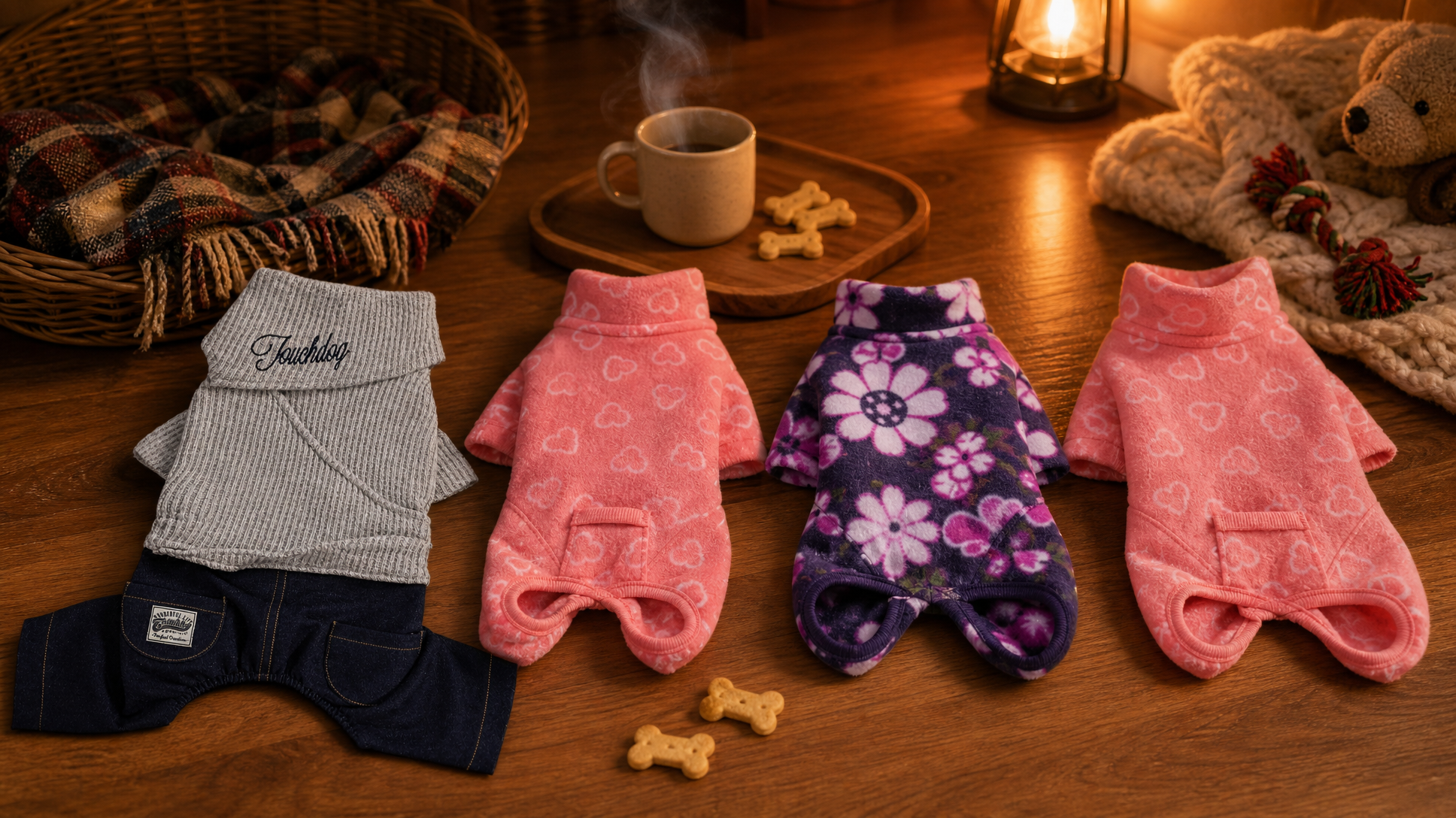
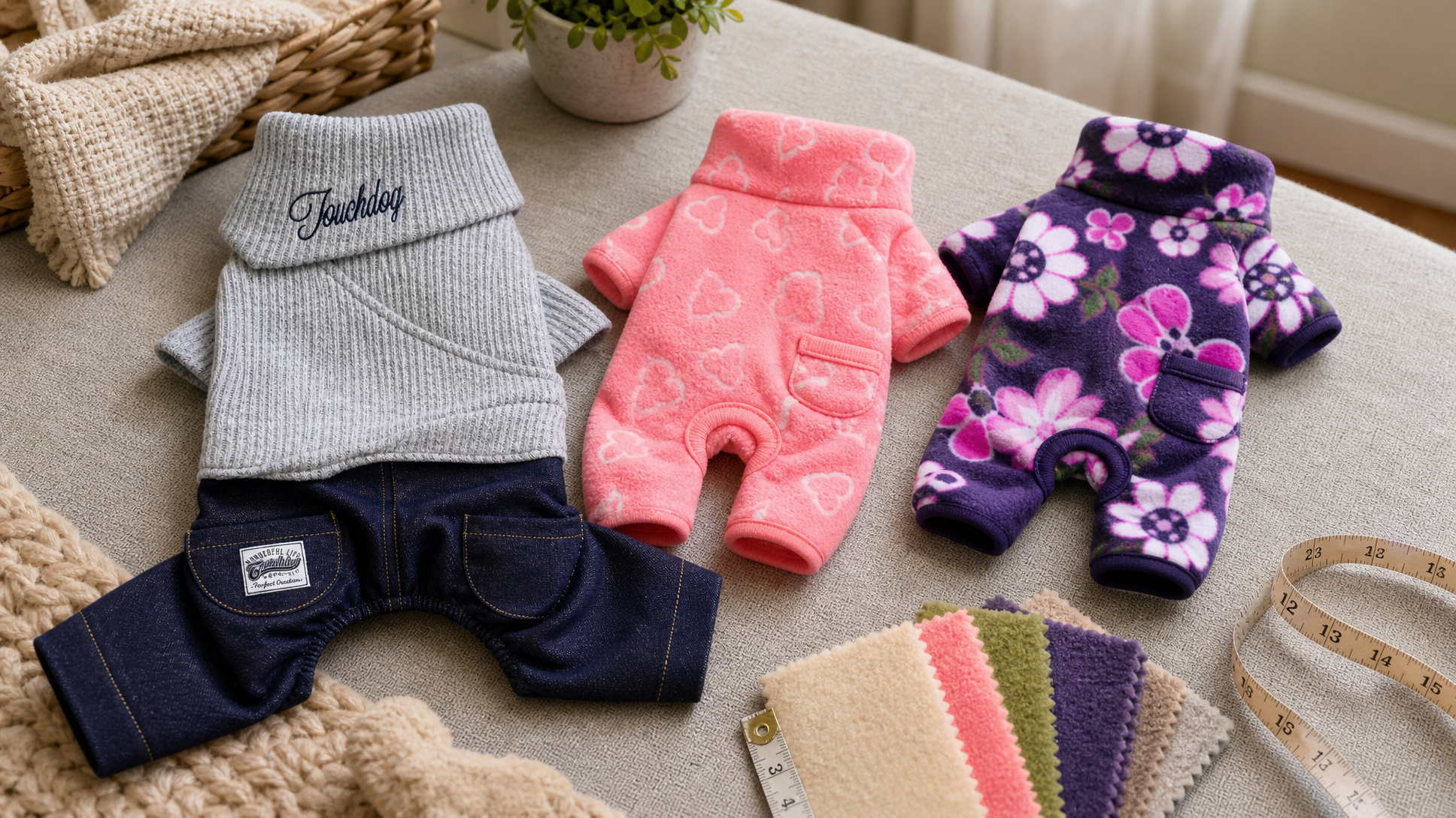
The Touchdog Vogue Neck-Wrap Sweater and Denim Pant Outfit is a two-piece look: a ribbed grey knit sweater top with a fold-over turtleneck collar and an embroidered Touchdog logo, paired with structured dark navy denim-style pants that feature decorative pocket detailing and contrast stitching. It's a distinct, put-together outfit — the kind that reads as intentional rather than just "my dog was cold."
The Klippo fleece turtleneck pajamas take a completely different approach. These are full-coverage one-piece bodysuits that wrap all four legs, the torso, and the neck in soft fleece. The Klippo Blush of Love version comes in a warm pink with an all-over heart print, while the Klippo Midnight Garden version is a deep purple covered in bold floral and petal shapes. Both styles have a snug turtleneck and four-leg coverage — no exposed belly, no bare legs.
Same category, very different constructions. Here's where each one wins.
Coverage: Where the Gap Is Biggest
This is the clearest difference between the two styles. The Touchdog sweater-and-pants set covers the back, chest, and hindquarters, but the legs themselves are mostly exposed below the pants line — much like a human wearing a sweater and jeans. For a lot of dogs, that's fine. The core stays warm, which is what matters most for temperature regulation.
The Klippo bodysuit covers everything — all four legs right down toward the paws, the belly, and the neck. If your dog is a breed that loses heat quickly through its extremities, or if you've noticed them shivering even in a sweater, a full-coverage fleece pajama is a meaningful upgrade. Small breeds with fine, short coats — Chihuahuas, toy breeds, miniature pinschers — often benefit from that extra leg coverage on genuinely cold days.
That said, more coverage isn't automatically better. Some dogs find full-leg suits restrictive and spend the first ten minutes of wearing one doing a stiff-legged shuffle around the kitchen. If your dog is active and easily annoyed by fabric around their legs, the two-piece style usually wins on comfort.
Warmth: Fleece vs. Knit
Fleece traps air and holds warmth well, especially against the body. The Klippo pajamas are made from soft fleece, which means they function more like a thermal underlayer — good at retaining the dog's own body heat across the whole surface they cover.
The Touchdog sweater is a ribbed knit construction. Knit fabrics breathe more than fleece, which can actually be an advantage: on a brisk autumn walk where your dog is moving and generating heat, a knit sweater is less likely to cause overheating than a full fleece suit. The denim pants add a bit of wind resistance at the back end, which helps outdoors.
Rough rule of thumb: fleece pajamas for cold indoor nights and very cold, still days; knit sweater-and-pants for active outings in cool-but-not-freezing weather.
Ease of Dressing
Ask any small-dog owner what the hardest part of dog clothing is, and they'll tell you it's getting four legs into four holes while the dog squirms. The Klippo full-bodysuit style requires threading all four legs through, which takes a little practice — but once you've done it a few times, it's actually quite fast because the stretchy fleece gives you room to work. The turtleneck slides over the head smoothly.
The Touchdog two-piece is a bit more involved since it's technically two separate garments, but the sweater top has a generous neck opening and the pants pull on from the back end. For dogs that tolerate dressing reasonably well, neither style is a struggle. For dogs that are genuinely dramatic about clothing, the one-piece bodysuit often wins because there's no repositioning between top and bottom.
When Each Style Makes More Sense
Go with the Touchdog Vogue Neck-Wrap Sweater and Denim Pant Outfit if:
- You want something that looks polished for a walk, a pet-friendly café, or photos
- Your dog is active and needs breathable fabric that won't overheat them
- The weather is cool but not bitterly cold
- Your dog dislikes fabric around their lower legs
Go with the Klippo fleece turtleneck pajamas if:
- Your dog is a cold-sensitive small breed that shivers easily
- You want something for lounging at home on cold evenings
- You're dealing with genuinely cold temperatures and want full-body warmth
- Your dog has just had a bath and you want to keep them warm while they dry
The Klippo Blush of Love (pink hearts) and Midnight Garden (purple florals) are both built the same way, so the choice between them is purely about your dog's personal aesthetic — which is a very real consideration when you're going to be looking at Instagram photos for years.
Do You Actually Need Both?
Honestly? A lot of small-dog owners end up with one of each, and it makes sense. The sweater-and-pants set handles outdoor time and cooler days; the fleece pajama covers cold nights and post-bath warmth. They serve genuinely different moments in the day, and neither one does the other's job as well.
If you're only buying one, think about where your dog spends most of their time and what they find comfortable. An active dog that goes on daily walks in the cold will get more use out of the knit sweater set. A homebody who mostly naps on the sofa and hates cold floors will wear the fleece pajama almost every day from October through March.
Either way, getting the size right matters more than anything else. A too-tight bodysuit restricts movement; a too-loose sweater bunches under the front legs. Always measure your dog's back length and chest girth before ordering, and check the size guide for whichever brand you're buying.
Browse both styles — and find the right size for your dog — at Petocart, with free shipping on eligible orders across the USA.
Frequently Asked Questions
Are fleece dog pajamas safe to sleep in overnight?
Generally yes, provided the fit is correct — not too tight around the neck or chest, and not so loose that fabric can bunch and restrict movement. Always check that your dog is comfortable and not showing signs of overheating before leaving them in a garment overnight. If your dog tends to get warm easily, a lighter knit may be a better overnight option than full fleece.
How do I measure my small dog for clothing?
You'll need two measurements: back length (from the base of the neck to the base of the tail) and chest girth (the widest point around the chest, just behind the front legs). Use a soft tape measure and measure snugly but not tightly. Always cross-reference those numbers with the specific brand's size chart — sizing varies between brands, so a "Medium" in one brand may not match a "Medium" in another.
Can small dogs wear sweaters or pajamas outside in the cold?
A knit sweater-and-pants set like the Touchdog Vogue outfit works well outdoors in cool weather — the ribbed knit breathes during activity and the pants add coverage at the back. Full fleece bodysuits are primarily designed for warmth and lounging; they can be worn outside in cold, calm conditions but aren't wind- or water-resistant, so they're better suited to short outdoor trips rather than long walks in wet weather.
Which small dog breeds benefit most from wearing dog clothes?
Breeds with short, fine, or single-layer coats tend to feel the cold most acutely — think Chihuahuas, Italian Greyhounds, Toy Fox Terriers, Miniature Pinschers, and Yorkshire Terriers. Very small dogs also have a higher surface-area-to-body-mass ratio, which means they lose heat faster than larger breeds. Senior dogs and puppies of any small breed also benefit from a little extra warmth in cooler months.